Voyagers K9 Apparel × STOQ: automating made-to-order sales across 10,000 SKUs
Selling products that still need to be made
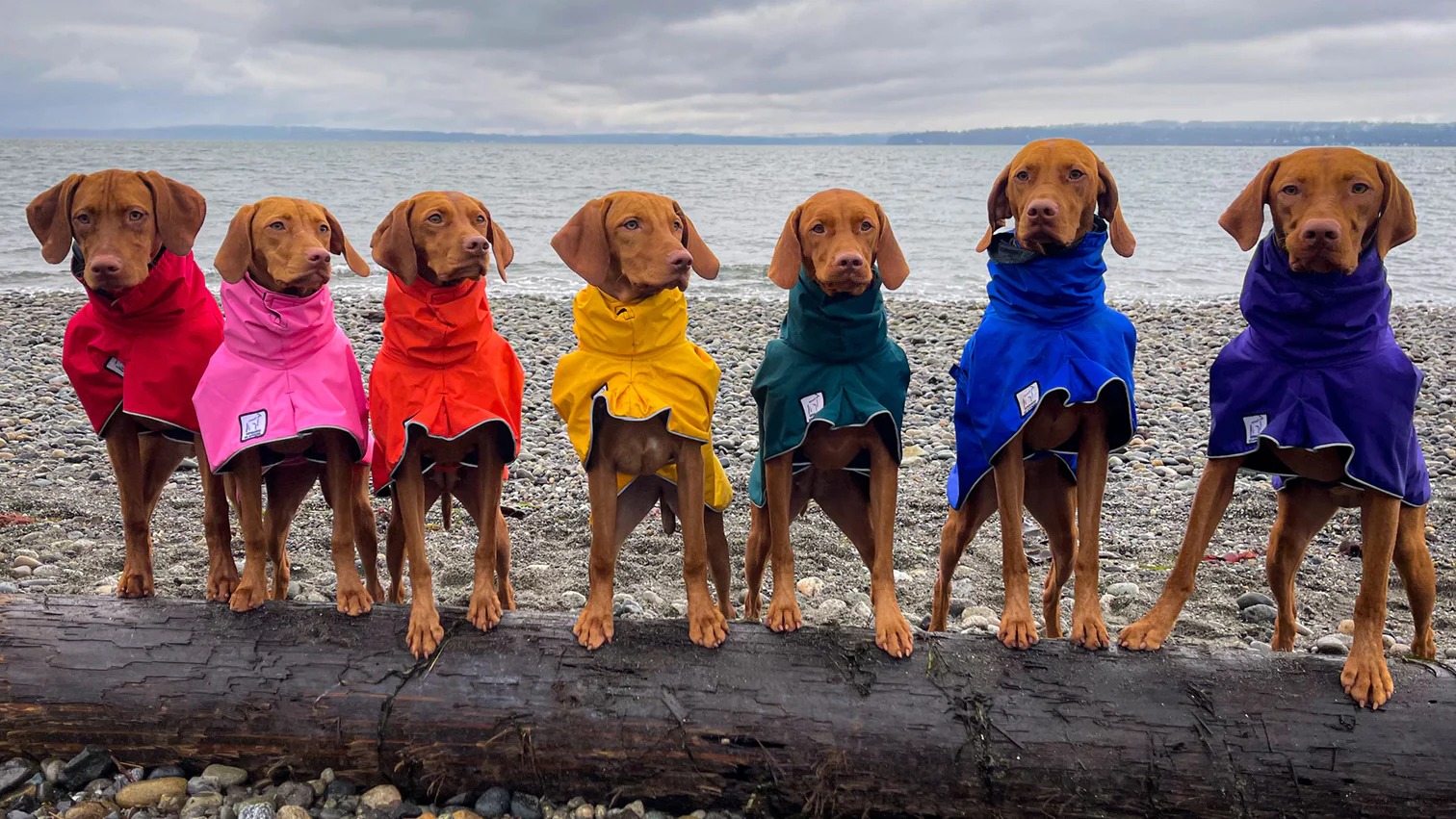
Voyagers K9 Apparel has been in business for almost 30 years, manufacturing breed-specific performance outerwear for dogs from its shop in Tacoma, Washington.
Today, the company manages almost 10,000 SKUs across 26 breeds. Some popular size and color combinations are stocked in advance because Voyagers can predict demand with reasonable confidence. For less common combinations, stocking every variant doesn't make sense.
Instead, Voyagers makes those products to order.
That model lets customers order the specific combination they want without requiring the company to hold inventory for every possible variant. But it created a challenge on Shopify: how do you let customers buy a product that isn't physically in stock while making it clear that the product still needs to be manufactured?
The problem wasn't taking the order. It was setting the right expectation.
Shopify could allow Voyagers to sell an item even when there was no inventory. From the customer's perspective, though, the product simply looked available.
That became particularly important when customers needed a coat quickly.
As Joe Hafner, CEO of Voyagers K9 Apparel, explained, a customer could order a winter coat for their dog, pay for expedited shipping, and expect it to arrive quickly. But if the coat still needed four or five days to manufacture, expedited shipping didn't change the manufacturing time.
"We didn't have a way for a customer to come to the site and go, 'Oh, I want this coat. I need it tomorrow.' and also know that it's going to take three, four, five days for us to make it before we can ship it out." - Joe Hafner
The team needed a better way to communicate when a product was made to order and what that meant for fulfillment.
Before STOQ, the team was managing it manually
Voyagers and its development team had built custom processes around Shopify's native inventory system.
They modified the theme to show made-to-order messaging when a customer selected certain variants. They added messaging to the cart and checkout, used metadata to identify preorder products, and manually changed inventory availability.
For product launches, the process became even more time-consuming.
When Voyagers launched a limited color, Carey Osenbau, owner of COR Marketing Group, and the person supporting the store's front and backend development, had to manually update the relevant products and variants.
"We'd have to go and update all the variants and metatags for these products for this preorder. So on top of that, it was very time intensive." - Carey Osenbau
The team couldn't simply schedule those changes and move on. They had to prepare the products manually, often right before a launch.
And even with all that messaging in place, customers could still make it through the purchase flow and ask where their order was.
The problem wasn't that Voyagers couldn't sell the products. It was that keeping inventory status, product messaging, and customer expectations aligned required too much manual work.
Why Voyagers chose STOQ
Carey had worked with other preorder and back-in-stock apps for clients and had seen approaches that relied heavily on inventory settings.
STOQ gave her more control over how preorder status was applied. Instead of relying solely on whether inventory was set to zero, the team could specify the products or collections where preorder behavior should apply.
That mattered for a catalog as large and varied as Voyagers'.
The team also wanted to avoid a revenue-share model. Joe had researched other options and found competitors where the pricing model involved taking a percentage of revenue.
STOQ's subscription model was a better fit.
"When I found your app, I was it was exactly what I was looking for that we can subscribe to this as a SaaS and not as a financial partner." - Joe Hafner
STOQ made the workflow easier to manage
With STOQ, the team could automate the preorder and made-to-order experience without repeatedly modifying product metadata and theme code.
Carey could customize the customer-facing experience, including the call-to-action button, colors, messaging, badges, and checkout information. She could also schedule changes rather than manually updating products immediately before a launch.
"The ability to be able to customize the call to action button and all the information directly on the product page with just the click of a few buttons has honestly for me and my team... saved us like hours of time." - Carey Osenbau
That flexibility also meant the team could decide where preorder status applied instead of treating the entire catalog the same way.
For Voyagers, that distinction matters. A high-volume variant may be stocked and ready to ship, while a less common combination may be made only after a customer orders it.
A new cooling coat gave the team another launch opportunity
STOQ also became part of the launch of a brand-new product: a cooling coat designed to help keep dogs cool in hot weather.
For Voyagers, the launch had a broader business purpose. The company is primarily focused on winter apparel, so a summer product helped bridge the seasonality of the business.
Carey described the product as generating a lot of interest and said STOQ made the preorder setup easier based on what the team had learned from previous launches.
The same workflow that helped Voyagers manage made-to-order products could now support a new product launch without rebuilding the preorder experience manually.
More control over a complex catalog
For Carey, one of the biggest advantages was the level of control available within STOQ.
She had used other preorder and notify apps with clients, but found that STOQ allowed them to control preorder status more directly and apply it to specific products or collections.
"The cool thing about this one is that you can actually control... the preorder status." - Carey Osenbau
She was also surprised by how much of the customer-facing experience could be customized directly within the app.
That combination of control and customization is particularly useful for a business where "out of stock" doesn't always mean "unavailable."
Sometimes it means the product needs to be made.
Bridging craft manufacturing and scale
Voyagers has built its business around manufacturing highly specific products rather than producing one generic coat for every dog.
That creates a natural tension between customization and scale. The more combinations the company offers, the harder it becomes to manage every product state manually.
STOQ helps Voyagers manage that complexity without forcing the company to change the way it manufactures.
As Joe put it:
"As a small but growing manufacturing company, one of the things that we need to be able to do in the marketplace is be responsive to customer needs and customer expectations whilst also providing a high value and an excellent product."
And ultimately:
"An app like STOQ is what helps us... bridge the gap between what a craft manufacturer can do and what a scaled manufacturer can do." - Joe Hafner
For Voyagers K9 Apparel, that means customers can order the products they want while the team manages a catalog of almost 10,000 SKUs without needing to stock every variant in advance.